

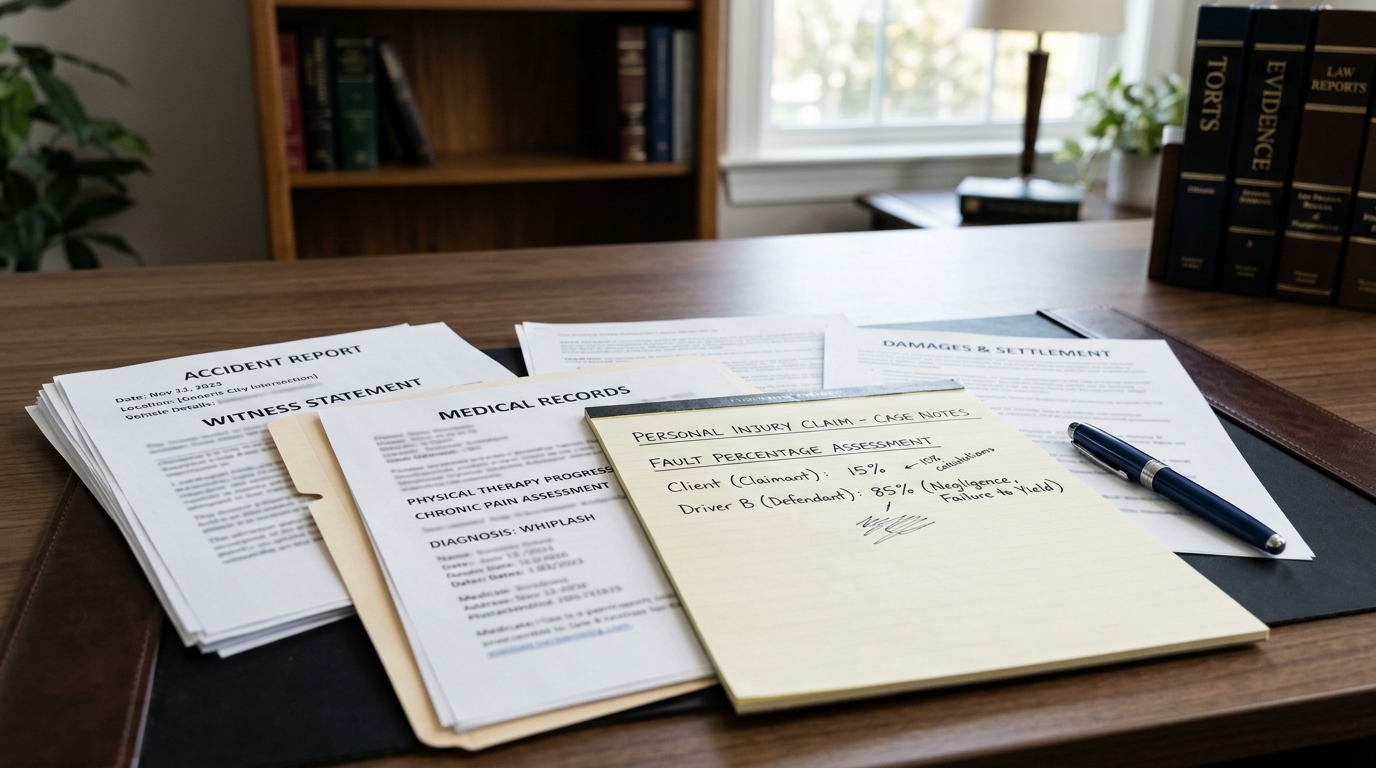
Comparative negligence can affect a New York personal injury claim when more than one person or party may share responsibility for an accident. An injured person may still have a claim even if the other side argues that the injured person was partly at fault, but the amount recovered may be reduced based on the assigned percentage of fault. People reviewing shared-fault issues may use a personal injury lawyer Long Island resource to understand how liability evidence, damages, insurance arguments, and deadlines are generally evaluated.
Quick Answer
Comparative negligence in New York means that an injured person’s own share of fault does not automatically bar recovery, but it can reduce damages in proportion to that share of responsibility. New York CPLR § 1411 states that culpable conduct attributable to the claimant, including contributory negligence or assumption of risk, does not bar recovery, but damages are diminished based on the claimant’s proportion of fault.
Key Takeaways
- New York follows a comparative negligence rule for many injury claims.
- A person may still recover damages even if partly responsible.
- The recovery may be reduced by the injured person’s percentage of fault.
- Comparative negligence can arise in car crashes, falls, pedestrian accidents, bicycle accidents, construction claims, boating accidents, dog bite claims, and other injury matters.
- Insurance companies often use shared-fault arguments to reduce claim value.
- Evidence matters because photos, reports, witness statements, video, medical records, and expert analysis can affect fault percentages.
- Deadlines still matter even when fault is disputed.
What Is Comparative Negligence?
Comparative negligence is a legal rule used when responsibility for an accident may be divided among more than one party. Instead of asking only whether one side was completely right or wrong, comparative negligence asks how much responsibility each party should carry.
For example, a driver may be blamed for speeding, while another driver may be blamed for turning without signaling. A property owner may be blamed for failing to fix a broken step, while the injured person may be accused of not watching where they were walking. A boating operator may be blamed for unsafe speed, while a passenger may be accused of ignoring instructions.
The key issue is not only whether the defendant was negligent. The claim may also involve whether the injured person’s conduct contributed to the injury and, if so, how much.
How New York’s Comparative Negligence Rule Works
New York CPLR § 1411 applies to claims involving personal injury, property injury, and wrongful death. The statute provides that culpable conduct attributable to the claimant or decedent, including contributory negligence or assumption of risk, does not bar recovery, but damages are reduced in proportion to that party’s share of fault.
A simple example can help explain the concept:
- Total damages are evaluated at $100,000.
- The injured person is found 20% at fault.
- The recovery may be reduced by 20%.
- The adjusted recovery would be $80,000.
The numbers in any real claim depend on evidence, negotiations, insurance review, court findings, jury findings, and applicable law. The important point is that partial fault does not automatically end a New York personal injury claim.
Why Comparative Negligence Matters
Comparative negligence matters because it can directly affect claim value. Even when liability seems clear, the defense may still argue that the injured person could have avoided the accident or reduced the harm.
Shared-fault arguments may affect:
- Settlement negotiations
- Insurance claim evaluation
- Lawsuit strategy
- Deposition questioning
- Expert analysis
- Mediation discussions
- Trial verdicts
- Final damages
A claim with strong injury evidence can still be reduced if the other side successfully proves partial fault. This is why liability evidence is just as important as medical evidence.
Common Shared-Fault Arguments
Insurance companies and defendants may raise many comparative negligence arguments depending on the type of accident.
Common arguments include:
- The injured person was distracted.
- The injured person was speeding.
- The injured person ignored a warning sign.
- The injured person failed to see an open and obvious hazard.
- The injured person crossed outside a crosswalk.
- The injured person wore unsafe footwear.
- The injured person failed to use safety equipment.
- The injured person entered a restricted area.
- The injured person did not follow instructions.
- The injured person waited too long to get medical care.
- The injured person made the injury worse by ignoring medical advice.
These arguments do not automatically succeed. They need to be supported by evidence and weighed against the defendant’s conduct.
Comparative Negligence in Car Accident Claims
Car accident claims often involve shared-fault arguments. Even when one driver appears mostly responsible, insurers may argue that another driver could have reacted differently.
Comparative negligence issues in car accident claims may include:
- Speeding
- Unsafe lane changes
- Distracted driving
- Tailgating
- Failure to yield
- Sudden stops
- Failure to use signals
- Running a red light or stop sign
- Poor lookout
- Driving too fast for weather or traffic
- Disputed intersection timing
New York car accident claims may also involve no-fault insurance and serious injury issues. Medical records, police reports, vehicle damage photos, dashcam footage, witness statements, traffic camera footage, and accident reconstruction may all affect how fault is evaluated.
A car accident attorney resource may help readers understand why fault evidence and medical documentation often need to be reviewed together after a crash.
Comparative Negligence in Pedestrian Accidents
Pedestrian accident claims may involve arguments about where the person was walking, whether traffic signals were followed, whether the driver had enough time to stop, and whether visibility was limited.
Shared-fault issues may include:
- Crossing outside a marked crosswalk
- Crossing against a signal
- Walking between parked cars
- Distracted walking
- Dark clothing at night
- Poor visibility
- Driver speed
- Driver distraction
- Failure to yield
- Failure to maintain lookout
A pedestrian may still have a claim even when the defense argues partial fault. The evidence must show what the driver did, what the pedestrian did, what the road conditions were, and how the impact happened.
Comparative Negligence in Bicycle and Motorcycle Accidents
Bicycle and motorcycle accident claims often involve blame arguments against the rider. Insurers may argue that the rider was speeding, lane-splitting, riding unpredictably, not visible, or failing to follow traffic rules.
Relevant evidence may include:
- Helmet or gear evidence
- Vehicle damage patterns
- Bicycle or motorcycle damage
- Road condition photos
- Lane position evidence
- Witness statements
- Traffic camera footage
- Driver statements
- Police reports
- Medical records
Fault should not be assumed based on rider status. Drivers may still be responsible for unsafe turns, dooring, failure to yield, distracted driving, speeding, or poor lookout.
Comparative Negligence in Slip and Fall Claims
Slip and fall claims often involve arguments that the injured person should have seen the hazard. A store, property owner, landlord, or maintenance contractor may argue that the condition was open and obvious, recently created, marked by warning signs, or avoidable.
Shared-fault issues may include:
- Whether the hazard was visible
- Whether lighting was poor
- Whether warning signs were present
- Whether the person was distracted
- Whether the footwear was appropriate
- Whether the person had a safe alternative path
- Whether the property owner had notice
- How long the hazard existed
- Whether the hazard violated inspection or maintenance practices
A premises liability attorney resource may help explain how property control, notice, inspections, photos, maintenance records, and witness evidence may affect unsafe-property claims.
Comparative Negligence in Trip and Fall Claims
Trip and fall claims may involve broken sidewalks, uneven pavement, potholes, loose mats, parking lot defects, stairs, ramps, thresholds, or debris. The defense may argue that the hazard was visible or that the injured person was not paying attention.
Evidence may include:
- Close-up photos of the defect
- Wide-angle photos showing location
- Measurements of height difference
- Lighting photos
- Weather conditions
- Surveillance footage
- Prior complaints
- Maintenance records
- Witness statements
- Footwear evidence
- Medical records
Photos should be taken quickly because defects may be repaired after the incident. A strong claim usually explains both why the hazard was dangerous and why the injured person’s actions were reasonable under the circumstances.
Comparative Negligence in Construction Accident Claims
Construction accident claims may involve different legal theories, including workplace safety rules, contractor responsibility, equipment defects, site control, and worker conduct. Comparative negligence may be raised in some claims, but construction cases can involve legal issues that require careful review.
The defense may argue that a worker:
- Failed to use available safety equipment
- Ignored instructions
- Entered an unsafe area
- Used equipment improperly
- Was rushing
- Failed to report a hazard
- Caused the accident through unsafe conduct
However, construction accident claims may also involve contractors, subcontractors, owners, supervisors, equipment companies, and safety rule violations. A construction accident attorney resource may help readers understand why jobsite control, safety devices, witness statements, incident reports, and contractor records may all matter.
Comparative Negligence in Truck Accident Claims
Truck accident claims may involve several responsible parties, including the driver, trucking company, maintenance provider, cargo loader, broker, or vehicle manufacturer. Comparative negligence arguments may be raised against drivers, passengers, pedestrians, bicyclists, or other motorists.
Shared-fault issues may involve:
- Following distance
- Blind spots
- Unsafe lane changes
- Speed
- Sudden braking
- Distracted driving
- Poor weather decisions
- Driver fatigue
- Cargo problems
- Mechanical issues
- Dashcam or electronic data
The defense may try to shift blame away from the trucking company. Preserving driver logs, electronic data, maintenance records, inspection reports, photos, witness details, and crash reports can be important.
Comparative Negligence in Dog Bite Claims
Dog bite claims may involve arguments that the injured person provoked the dog, ignored warnings, entered private property without permission, approached too closely, startled the dog, or failed to act reasonably around the animal.
Important evidence may include:
- Dog owner information
- Prior bite or aggression history
- Animal control reports
- Health department reports
- Witness statements
- Photos of injuries
- Property location
- Warning signs
- Text messages or complaints
- Medical records
- Vaccination information
Comparative negligence arguments should be evaluated carefully because the dog owner’s knowledge, dog history, restraint practices, and attack location may all matter.
Comparative Negligence in Boating Accident Claims
Boating accident claims can involve shared-fault issues because passengers, operators, vessel owners, rental companies, marinas, and other boaters may all play a role.
Comparative negligence arguments may include:
- Passenger ignored safety instructions.
- Operator failed to maintain lookout.
- Vessel owner allowed unsafe operation.
- Rental company failed to provide safety instruction.
- Passenger failed to wear a life jacket.
- Operator was impaired.
- Another boat created unsafe wake.
- Dock or marina conditions were unsafe.
- Weather warnings were ignored.
Boating claims may require accident reports, witness statements, GPS data, vessel records, safety equipment evidence, weather information, and medical records.
Comparative Negligence and Medical Treatment
Comparative negligence usually focuses on accident fault, but medical treatment decisions can also affect damages. The defense may argue that the injured person failed to reduce damages by delaying care, missing appointments, ignoring restrictions, or stopping treatment early.
Common medical documentation issues include:
- Delayed first treatment
- Gaps in care
- Missed therapy visits
- Ignored referrals
- Failure to follow work restrictions
- Inconsistent symptom descriptions
- No documentation of future care needs
These issues do not always defeat a claim. A person may have valid reasons for treatment gaps, such as transportation problems, insurance delays, work obligations, family responsibilities, or delayed symptom development. Medical records and timeline notes can help explain the situation.
Evidence That Can Reduce Unfair Blame
Evidence is the strongest response to unfair comparative negligence arguments. The goal is to show what happened, what each party did, and why the injured person’s actions were reasonable under the circumstances.

Helpful evidence may include:
- Accident reports
- Photos of the scene
- Videos
- Surveillance footage
- Dashcam footage
- Witness statements
- Property records
- Maintenance records
- Weather records
- Medical records
- Expert analysis
- Vehicle damage photos
- Event timelines
- Text messages or emails
- Insurance communications
- Worksite records
- Boating or vessel records
- Animal control records, when relevant
For broader documentation planning, readers may review how evidence for personal injury claims can help connect accident facts, injury, responsible parties, and damages.
Why Early Documentation Matters
Early documentation can affect fault percentages. A hazard may be repaired. A vehicle may be sold or fixed. Surveillance footage may be overwritten. Witnesses may disappear. Snow, ice, spills, wake patterns, and weather conditions may change quickly.
Early documentation may include:
- Scene photos
- Injury photos
- Witness contact information
- Incident reports
- Police reports
- Medical records
- Written timeline notes
- Insurance letters
- Photos of damaged property
- Video preservation requests
- Public entity notices, when applicable
The longer the delay, the easier it may be for the defense to create uncertainty or shift blame.
Insurance Company Tactics in Shared-Fault Claims
Insurance companies may use comparative negligence to reduce settlement value. This can happen even when the defendant clearly contributed to the accident.

Common insurance tactics may include:
- Asking leading questions in recorded statements
- Overemphasizing minor inconsistencies
- Claiming the hazard was obvious
- Blaming delayed treatment
- Arguing the injured person was distracted
- Suggesting the injury was pre-existing
- Using social media posts out of context
- Claiming the injured person ignored warnings
- Offering a quick settlement before evidence is complete
Statements to insurers should be accurate and limited to known facts. Guessing about speed, timing, distance, visibility, or fault can create problems later.
Comparative Negligence and Settlement Value
Settlement value may be affected by both damages and fault percentage. A claim with serious injuries can still be reduced if the injured person is assigned partial responsibility. A claim with disputed injuries may also be reduced if medical records are inconsistent or incomplete.
Settlement evaluation may consider:
- Strength of liability evidence
- Percentage of fault assigned to each party
- Injury severity
- Medical treatment
- Permanent limitations
- Lost income
- Future care needs
- Insurance coverage
- Witness credibility
- Expert opinions
- Prior similar incidents
- Video or photographic evidence
- Public entity issues
- Trial risk
Publicly available personal injury case results may provide general context, although every case depends on its own facts, injuries, evidence, insurance coverage, and applicable law.
Deadlines Still Matter When Fault Is Disputed
A disputed-fault claim still has deadlines. Waiting too long can weaken or bar a claim even when the injured person has strong evidence.
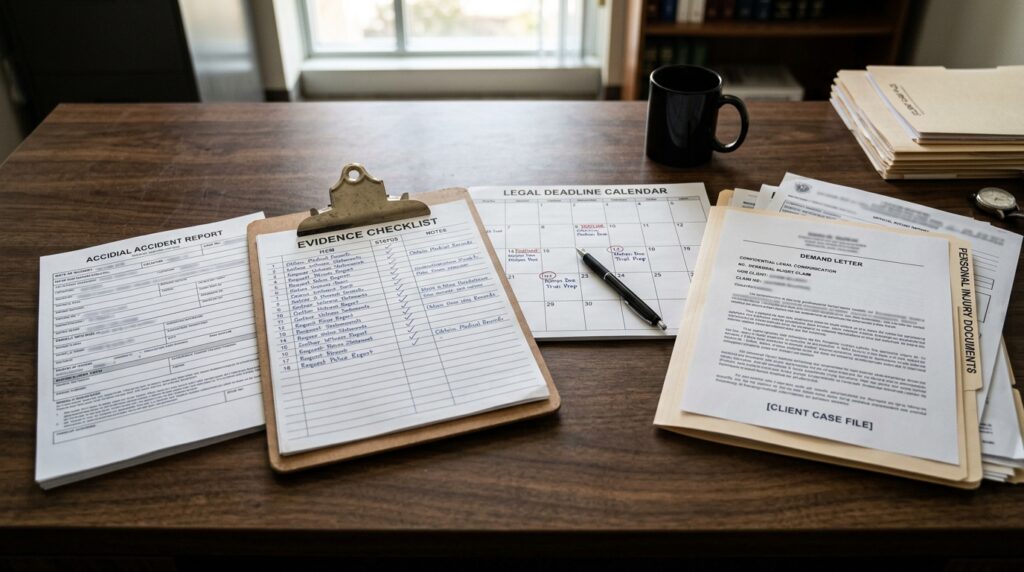
The New York Courts statute of limitations timetable lists three years for many negligence-based personal injury claims, two years for wrongful death claims, and different deadlines for other case types such as medical malpractice and product liability.
Shorter notice requirements may apply when public entities are involved. New York General Municipal Law § 50-e generally requires notice of claim within 90 days when notice is required for certain tort claims against public corporations.
This can matter in cases involving public sidewalks, municipal vehicles, public schools, public hospitals, public docks, public transportation, government buildings, or state-controlled locations.
Common Mistakes in Comparative Negligence Claims
Some mistakes can make shared-fault arguments harder to fight.
Common mistakes include:
- Admitting fault before all facts are known
- Guessing during an insurance statement
- Not taking photos of the scene
- Failing to get witness information
- Waiting too long to get medical care
- Posting accident details on social media
- Throwing away damaged items
- Not preserving video footage
- Not reporting the incident
- Missing insurance or legal deadlines
- Ignoring medical instructions
- Accepting a quick settlement before fault is fully investigated
A strong response to comparative negligence usually depends on calm documentation, not argument alone.
When Legal Guidance May Be Useful
Legal guidance may be useful when fault is disputed, an insurance company blames the injured person, multiple parties may be responsible, a public entity may be involved, injuries are serious, or settlement offers appear too low because of shared-fault arguments.
A comparative negligence review may require accident reports, photos, witness statements, medical records, insurance letters, expert analysis, vehicle or property evidence, worksite records, animal control records, boating records, public entity review, and deadline tracking.
People researching local support may review a Farmingdale legal office location when looking for Long Island personal injury claim information.
FAQs About Comparative Negligence in New York
Can someone recover damages if partly at fault in New York?
Yes. Under New York’s comparative negligence rule, partial fault does not automatically bar recovery. The amount recovered may be reduced based on the injured person’s percentage of responsibility for the accident.
How does comparative negligence reduce a settlement?
Comparative negligence can reduce settlement value by assigning a percentage of fault to the injured person. If damages are valued at a certain amount and the person is found partly at fault, the recovery may be reduced by that percentage.
Who decides the percentage of fault?
Fault percentages may be argued by insurance companies during settlement discussions or decided by a judge or jury if the case goes to litigation. Evidence such as reports, photos, video, witness statements, and expert opinions can affect the final allocation.
Does admitting fault at the accident scene hurt a claim?
It can. People sometimes apologize or guess about what happened before all facts are known. A statement made under stress may be used later. It is safer to report facts accurately, get medical care, and avoid speculation about legal fault.
What evidence helps fight unfair blame?
Helpful evidence may include photos, video, accident reports, witness statements, maintenance records, weather data, medical records, vehicle damage photos, surveillance footage, expert analysis, and written timelines showing what happened before and after the accident.
Final Thoughts
Comparative negligence can affect many New York personal injury claims because the other side may argue that the injured person shares responsibility. Partial fault does not automatically end a claim, but it can reduce damages if supported by evidence. The strongest claims usually depend on early documentation, preserved photos and video, witness statements, medical records, expert review, and a clear timeline showing how each party’s conduct contributed to the accident.