

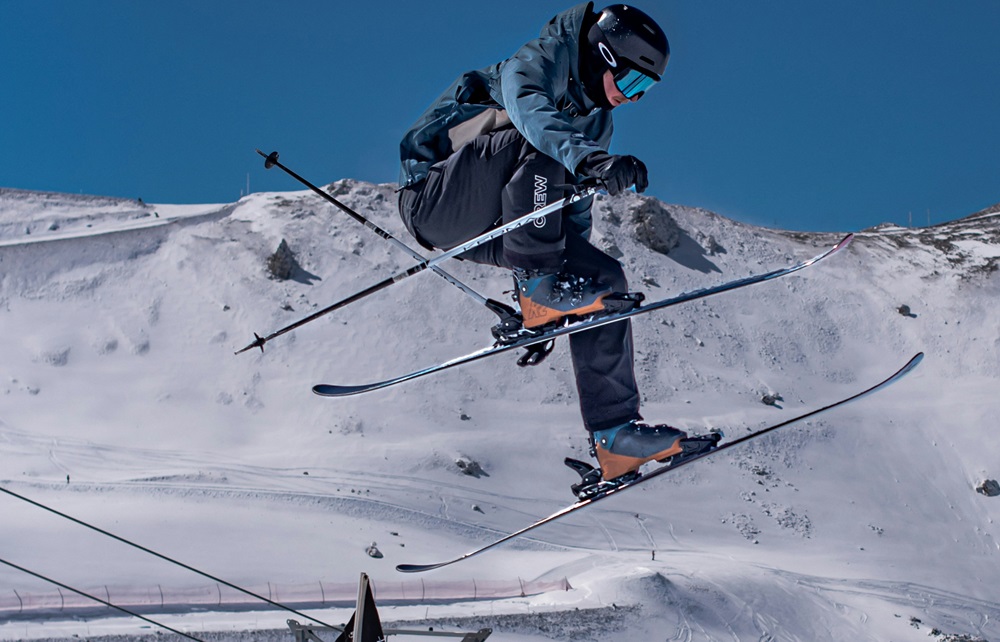
Ordering gear you can’t try on is a gamble. With ski gear, a wrong guess costs a full day on the hill.
Boots that are a size off hurt your feet. Skis in the wrong length feel either twitchy or sluggish. If you want to buy skis and boots online, a few steps before checkout keep you out of the return line.
TL;DR on Sizing Skis and Boots Online
Here are the main points before the details:
- Buy your boots first, because skis and bindings get matched to them.
- Measure both feet in millimeters and compare the result to the maker’s size chart.
- Check width and volume, since length alone doesn’t guarantee a fit.
- Pick ski length by your height, then adjust for your ability and the terrain you ski.
- Read the return terms before you pay, especially for mounted skis and used boots.
Why You Should Sort Your Boots First
Boots are the part of your setup that has to fit your body. Skis can be a little off and still work. A boot that is off will hurt all day.
Boots also decide your bindings. Every boot has a sole length, printed on the sole or the heel in millimeters, and a shop adjusts the bindings to that number. Buying boots first means you know the number before you choose skis.
How to Measure Your Foot at Home
Skiers often size boots by their street shoe size. That leads to mistakes, because ski boot sizes follow your foot length in millimeters (called Mondopoint). Measure it yourself with these steps:
- Stand against a wall: Put your heel flat against it, wearing the thin sock you ski in.
- Mark your longest toe: Use a pencil on a sheet of paper under your foot.
- Measure to the heel: Measure from the wall to the mark in millimeters.
- Do both feet: Most people have one larger foot, so use the longer measurement.
Measure late in the day, when your feet are at their largest. Then compare the number to the size chart for the exact boot. Charts differ between makers, so don’t assume a 27.5 in one brand matches a 27.5 in another.
What to Check Besides Length
Length is only one part of the fit. Many online boot returns come down to shape and volume. A boot can match your length and still pinch your forefoot or let your heel lift.
Look for these details in the product listing and in your own fit:
- Last width: The width of the boot at the forefoot, usually listed in millimeters. Compare it to the width of your own foot at its widest point.
- Your sock: A thick hiking sock can make a correct boot feel too small, so try boots on with a thin ski sock.
If you’re unsure between two sizes, go with the snugger one. A shop can stretch a tight boot shell in problem spots. Nobody can shrink one that is too big.
How to Choose Ski Length by Height and Ability
Ski size charts aren’t consistent across brands, so treat any chart as a starting point. A common rule puts the right length somewhere between your chin and the top of your head.
Then adjust for how you ski:
- Beginners: Go shorter, toward your chin. Shorter skis turn more easily and forgive mistakes.
- Intermediate skiers: Stay near your nose or eyebrows for a balance of control and stability.
- Advanced skiers: Go longer, toward the top of your head or above, if you ski fast or in deep snow.
What to Check in the Return Policy
Even with careful measuring, you may need to send something back. Read the return terms before you pay, not after the box arrives.
Check these points first:
- Return window: How many days you have after delivery.
- Condition rules: Many sellers won’t take skis back once bindings are mounted or boots have been skied in.
- Return shipping: Who pays, because skis and boots are bulky and shipping can cost a lot.
On a marketplace such as Geartrade, which sells both new and used gear, read the condition notes on used boots too. Shell wear and packed out liners change how a boot fits.
FAQ
These are other questions skiers ask before ordering:
Can You Buy Ski Boots Online Without Trying Them On?
Yes, but it works best if you know your foot length, width and the model you want. Buying from a seller with clear return terms lowers the risk.
Should I Buy Skis or Boots First?
Buy boots first. Your boot sole length decides how the bindings are set, so you want that number before you finish the order.
Do I Need a Shop to Mount My Bindings?
Yes. A trained technician should mount the bindings and set the release settings for your weight, height and ability. That is a safety step, so don’t do it yourself.
Is It Better to Size Boots Up or Down?
Go with the snugger size. A boot that is slightly tight can be adjusted by a bootfitter. A boot that is too big can’t be fixed.
What If My Ski Length Falls Between Two Sizes?
Pick the shorter one if you are a beginner or like quick turns. Pick the longer one if you ski fast or in deep snow.
Final Thoughts on Buying Skis and Boots Online
Online shopping works well when you do the measuring first. Start with your boots, check the width as well as the length, and size your skis to how you actually ski.
Then read the return terms before you buy. With the numbers in hand, you can order with confidence and spend your first day on snow skiing instead of swapping gear.