



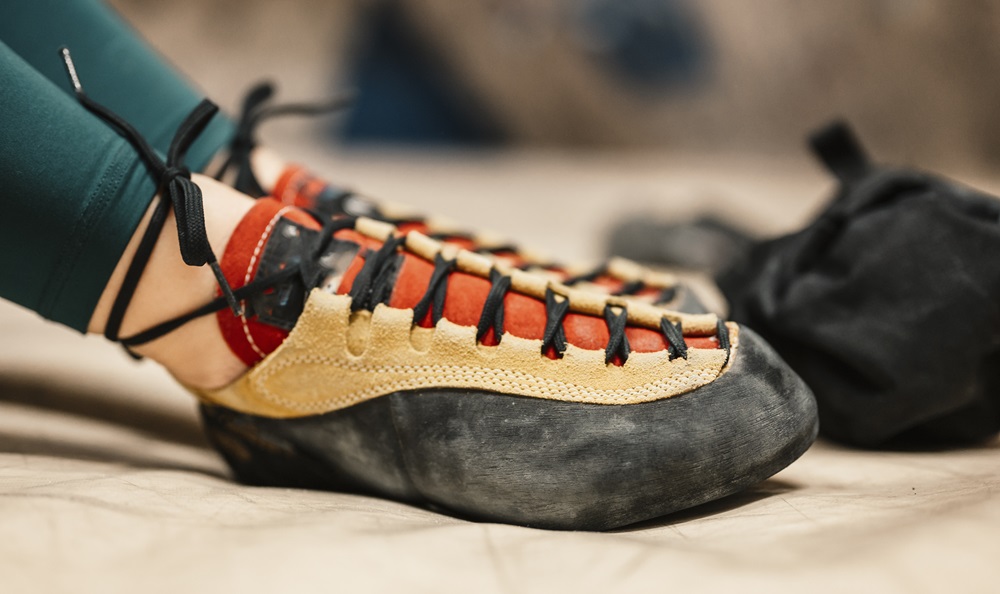
Finding the right balance between performance and comfort when you buy climbing shoes can feel like solving a puzzle.
You want shoes that help you climb better, but you don’t want to end every session in agony.
Let’s clear up the confusion around climbing shoe fit once and for all.
The Performance vs. Pain Dilemma
Here’s what most climbers get wrong: they think pain equals performance. That’s not true.
Good climbing shoes should feel snug, not painful. Think of it like a firm handshake versus someone crushing your fingers. One gives you confidence, the other just hurts.
Professional climbers wear shoes that fit precisely without causing real pain. They need to focus on their moves, not on throbbing feet.
What “Snug” Actually Means?
A proper climbing shoe fit feels like this:
- Your toes touch the front of the shoe
- No dead space around your heel
- The shoe holds your foot securely without pinching
- You can wear them for your entire climbing session
Your feet shouldn’t go numb. If they do, the shoes are too small.
Signs Your Shoes Are Too Tight
Watch out for these red flags:
Sharp, shooting pain in your toes or foot arch means the shoes are crushing your feet. Good climbing shoes create pressure, not stabbing sensations.
Numbness or tingling tells you the shoes are cutting off circulation. This can lead to permanent nerve damage.
Blisters that won’t heal indicate constant friction from poor fit. While some initial blistering is normal, ongoing problems suggest sizing issues.
You can only climb for 10-15 minutes before the pain becomes unbearable. Quality shoes should let you climb for hours.
The Sweet Spot of Climbing Shoe Fit
The perfect climbing shoe creates what we call confident compression. Your foot feels locked in place, but blood still flows normally.
Here’s how to test it: put on the shoes and stand normally for five minutes. You should feel pressure but not pain. If you’re shifting your weight or lifting one foot to relieve discomfort, they’re too small.
Your climbing improves when your feet feel secure, not when they’re screaming for relief.
Different Climbing Styles Need Different Fits
Sport climbers often prefer slightly tighter shoes for precise footwork on small holds. But “tighter” doesn’t mean “painful.”
Traditional climbers usually choose more comfortable fits since they’re on the rock longer. Comfort becomes crucial during multi-pitch climbs.
Boulderers can handle snugger fits for short, powerful problems. Even then, the shoes shouldn’t cause actual pain.
Breaking In New Climbing Shoes
New climbing shoes will feel tighter at first. The materials soften and mold to your feet over time.
But here’s the key: if brand-new shoes cause sharp pain, they’ll never become comfortable. Leather stretches about half a size. Synthetic materials barely stretch at all.
Start with shorter climbing sessions in new shoes. Gradually increase the time as they conform to your feet.
When Tight Becomes Dangerous?
Pain that persists after removing your shoes signals potential injury. Nerve compression can cause permanent damage if ignored.
Hot spots that develop into open wounds need immediate attention. Your feet are telling you something’s wrong.
Some climbers develop Morton’s neuroma (nerve thickening) from consistently wearing shoes that are too small. This condition can require surgery.
Finding Your Perfect Fit
Try on climbing shoes later in the day when your feet are slightly swollen. This mimics how they’ll feel during long climbing sessions.
Bring your own thin climbing socks if you use them. The fit changes dramatically with even thin socks.
Don’t assume your climbing shoe size matches your street shoe size. Most people wear climbing shoes one to two sizes smaller than their regular shoes.
Walk around the store for at least 10 minutes in potential purchases. Good shops encourage this.

The Bottom Line
Performance comes from precision, not pain. Shoes that fit properly give you better foot placement and more confidence on challenging moves.
You’ll climb longer, try harder routes, and enjoy the sport more when your feet feel good.
Remember: if you’re spending more time thinking about foot pain than your next move, your shoes don’t fit right. The goal is to forget you’re wearing them while still feeling their support.
Frequently Asked Questions
Should my toes be flat or curled inside my climbing shoes?
Answer: For a high-performance fit, your toes should be slightly “crimped” or touching the front of the shoe, but they should never be crushed. There should be zero dead space around your toes or heel. If your toes are forced into a painful overlap, the shoes are likely too small.
How much can I expect my new shoes to stretch?
Answer: It depends on the material. Unlined leather shoes can stretch up to a half-size as they mold to your feet. However, synthetic materials stretch very little, if at all. If a synthetic shoe feels painfully tight in the store, don’t count on it “breaking in” to a comfortable fit later.
Is it normal for my feet to feel numb after a few climbs?
Answer: No. Numbness or tingling is a major red flag that the shoe is cutting off your circulation. While climbing shoes should provide “confident compression,” they should never cause nerve issues. If you lose feeling in your toes, you need to size up to avoid potential long-term injury.
I’m a beginner; should I buy the same size as a professional climber?
Answer: Not necessarily. Professional climbers often prioritize precision for short, intense routes. As you are starting out, your goal should be a snug but comfortable fit that allows you to climb for longer sessions. You’ll improve faster if you’re focusing on your technique rather than your foot pain.
Why is my “street shoe” size different from my climbing shoe size?Answer: Climbing shoes are designed to pull the foot forward into a powerful position, which usually requires a smaller scale than your casual sneakers. Most climbers find their “sweet spot” is one to two sizes smaller than their regular shoes, but you should always use the “five-minute stand test” to confirm the fit.


